Microplastics and clear aligners: what the research says
Clear aligners are worn 20–22 hours a day. A growing body of peer-reviewed work has begun measuring what that constant wear releases. Here is a plain-English summary of the evidence — and the honest limits of it.
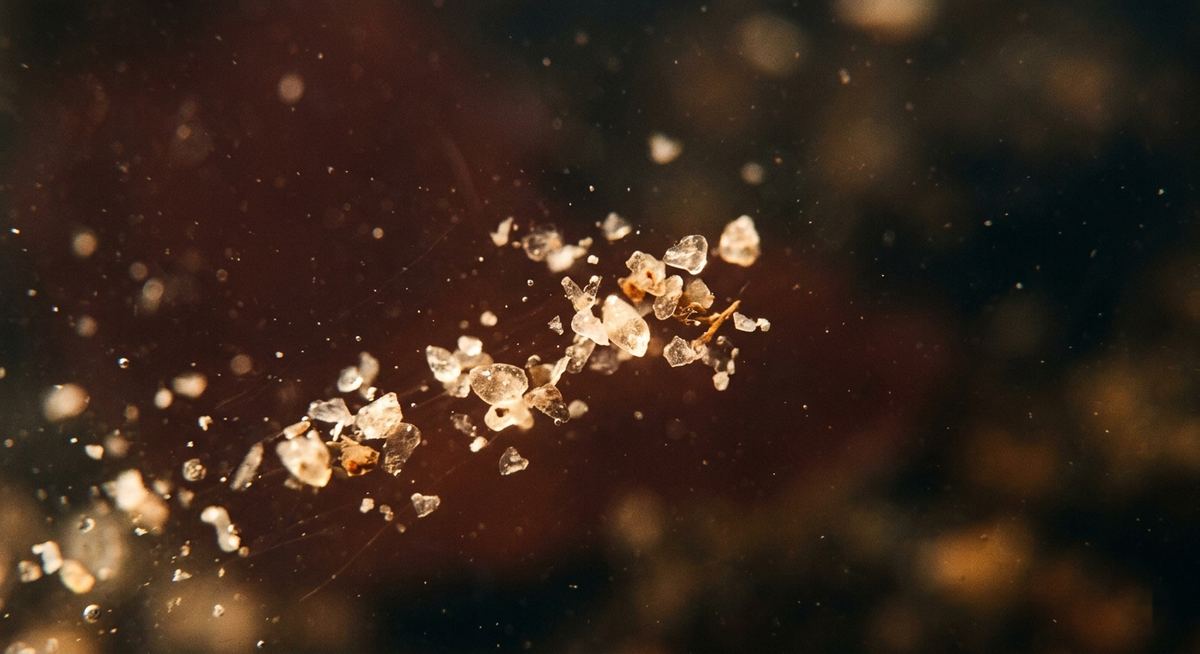
Clear aligners transformed orthodontics by making tooth movement nearly invisible. But their defining feature — that they're worn almost continuously — also makes them the highest-exposure plastic device in routine dental use. A tray spends the day under friction from chewing, speaking and grinding, bathed in warm saliva, before being swapped for the next in the series. Researchers have started asking what that does at the material's surface.
What studies have measured
Several laboratory studies have placed orthodontic aligner and retainer materials into simulated oral environments — artificial saliva at body temperature, sometimes with mechanical cycling to mimic wear — and then measured what leaches out. The findings, broadly, are consistent:
- Thermoplastic aligner materials release microplastic and nanoplastic particles under simulated wear, with release increasing as mechanical stress and time increase.
- Some materials release measurable quantities of chemical additives, including bisphenols (such as BPA) and other compounds used in plastic manufacture.
- Particle release is not uniform — it varies by material, by brand, and by how the tray is handled, cleaned and worn.
The 2025 narrative review in Progress in Orthodontics synthesised this work and concluded that leaching from clinical dental and orthodontic polymers is a genuine exposure route that deserves far more attention than it currently receives.
What we know about the health side
This is where honesty matters. The materials science — that plastics shed particles and additives during wear — is increasingly well established. The downstream health picture is less settled, because it's a young field.
What is known from the broader microplastics literature: particles have been found in human lung tissue, in the gut, in blood and even in placental tissue, and certain plastic additives such as bisphenols are recognised endocrine disruptors. What is not yet known with precision is the dose-response relationship for dental-device exposure specifically — how much reaches the body, and what threshold, if any, produces harm.
Why retainers are the sharper concern than aligners
It may seem counterintuitive, given aligners are worn more hours per day. But aligners are replaced every one to two weeks as you progress through a series, so any single tray's contact time is short. A retainer, by contrast, is worn nightly for years — sometimes decades — and is often never tested at all. Cumulative contact time is the variable that matters, and on that measure the humble retainer is the bigger exposure story.
What you can reasonably do
- Choose materials that have been independently tested for particle release, not just regulatory biocompatibility.
- Replace worn devices on schedule — a degraded, scratched tray sheds more than a fresh one.
- Avoid hot liquids while wearing trays, which accelerates material breakdown.
- Favour brands that publish their data rather than assert their claims.
Source: Shariff et al. (2025), Progress in Orthodontics 26(1), Article 49, and the wider peer-reviewed literature on microplastic leaching from dental polymers.